
Pate a tartiner Poulain

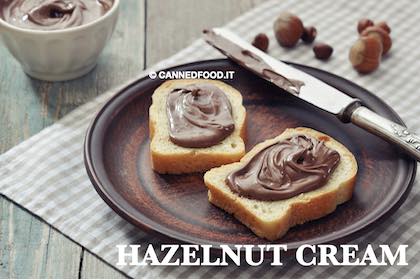
Hazelnut cream, commonly known as hazelnut spread, is a smooth, sweet paste made primarily from roasted hazelnuts, often combined with cocoa, sugar, and fats. The production process varies slightly between homemade and industrial methods, but the core steps remain consistent.
🏭 Industrial Hazelnut Cream Production
In commercial settings, the production of hazelnut cream involves more sophisticated equipment and processes:
Quality Control and Roasting: Hazelnuts undergo rigorous quality checks, including visual inspections and mechanical sorting. They are then roasted to develop flavor and facilitate skin removal.
Grinding and Mixing: The roasted hazelnuts are ground into a fine paste. This paste is then mixed with ingredients like sugar, cocoa powder, milk powder, and emulsifiers in large industrial mixers to ensure a uniform consistency.
Refining and Homogenization: The mixture is refined to achieve the desired smoothness and particle size. Homogenization ensures that the spread remains stable and doesn't separate over time.
Packaging: The final product is cooled and packaged into jars or containers, ready for distribution.
In Italy, the production of hazelnut cream is a blend of rich tradition and meticulous craftsmanship, particularly in regions like Piedmont, renowned for their premium hazelnuts. Here's an overview of the typical production process:
🌰 1. Harvesting and Drying
Hazelnuts are harvested between late August and early autumn. Post-harvest, they undergo cleaning to remove debris and are dried—either naturally or using dryers—to reduce moisture content, ensuring longevity and preventing mold formation.
🏭 2. Shelling and Calibration
Once dried, hazelnuts are shelled using mechanical crushers. The kernels are then calibrated based on size, which determines their subsequent use: larger kernels are often sold whole, while smaller ones are processed into products like flour, paste, or cream.
🔥 3. Roasting
Roasting enhances the flavor and aroma of hazelnuts. This step is carefully controlled to achieve the desired roast level, which is crucial for the final taste profile of the cream.
⚙️ 4. Grinding and Refining
Roasted hazelnuts are ground into a paste. For a smoother texture, the paste undergoes further refining using equipment like ball mills, reducing particle size to achieve a creamy consistency.
🍫 5. Mixing Ingredients
Depending on the desired flavor profile, ingredients such as sugar, cocoa powder, milk powder, and oils are added to the hazelnut paste. For instance, some artisanal creams may include only hazelnuts, organic cane sugar, and a pinch of sea salt, emphasizing purity and natural taste.
🧪 6. Quality Control and Packaging
Throughout the production process, rigorous quality checks are conducted to ensure consistency and safety. The final product is then packaged, often in glass jars, ready for distribution.
Italian hazelnut cream production is deeply rooted in regional traditions and emphasizes high-quality ingredients and careful processing to deliver a product celebrated worldwide for its rich flavor and smooth texture.
Turkey is the world's leading producer of hazelnuts, supplying approximately 70% of the global market. The country's Black Sea region, particularly provinces like Ordu, Giresun, and Sakarya, is renowned for its hazelnut cultivation. This abundance has fostered a robust hazelnut cream industry, with numerous companies processing hazelnuts into spreads for both domestic consumption and international export.
🏭 Prominent Turkish Hazelnut Cream Producers
Several Turkish companies are notable for their hazelnut cream production:
Seyidoğlu Gıda: Established in 1952, Seyidoğlu is a well-known brand producing a variety of traditional Turkish sweets, including hazelnut creams.
Ararlar Gıda: This company specializes in producing hazelnut creams and other confectionery products, adhering to traditional recipes and methods.
Yavuz Gıda: Founded in 1933 in Giresun, Yavuz Gıda has a long history in hazelnut processing and exports a range of hazelnut products worldwide.
Şenocak Hazelnut Company: With facilities equipped with modern technology, Şenocak produces various hazelnut products, including creams, ensuring high-quality standards.
🌍 Global Influence and Challenges
Turkey's dominance in hazelnut production has significant implications for global markets. Major international brands, such as Ferrero (producer of Nutella), rely heavily on Turkish hazelnuts. In 2014, Ferrero acquired the Oltan Group, Turkey's leading hazelnut supplier, to secure its supply chain.
However, this dominance has led to concerns among Turkish farmers about market monopolization and pricing pressures. Many farmers feel that large multinational companies have disproportionate control over the market, affecting their earnings and livelihoods.
Turkey's hazelnut cream industry is a vital component of its agricultural and economic landscape, blending traditional practices with modern production techniques to meet global demand.
Are you manufacturing hazelnut cream? Do you want that your Company will be added here? Send me an email. highlight your product!