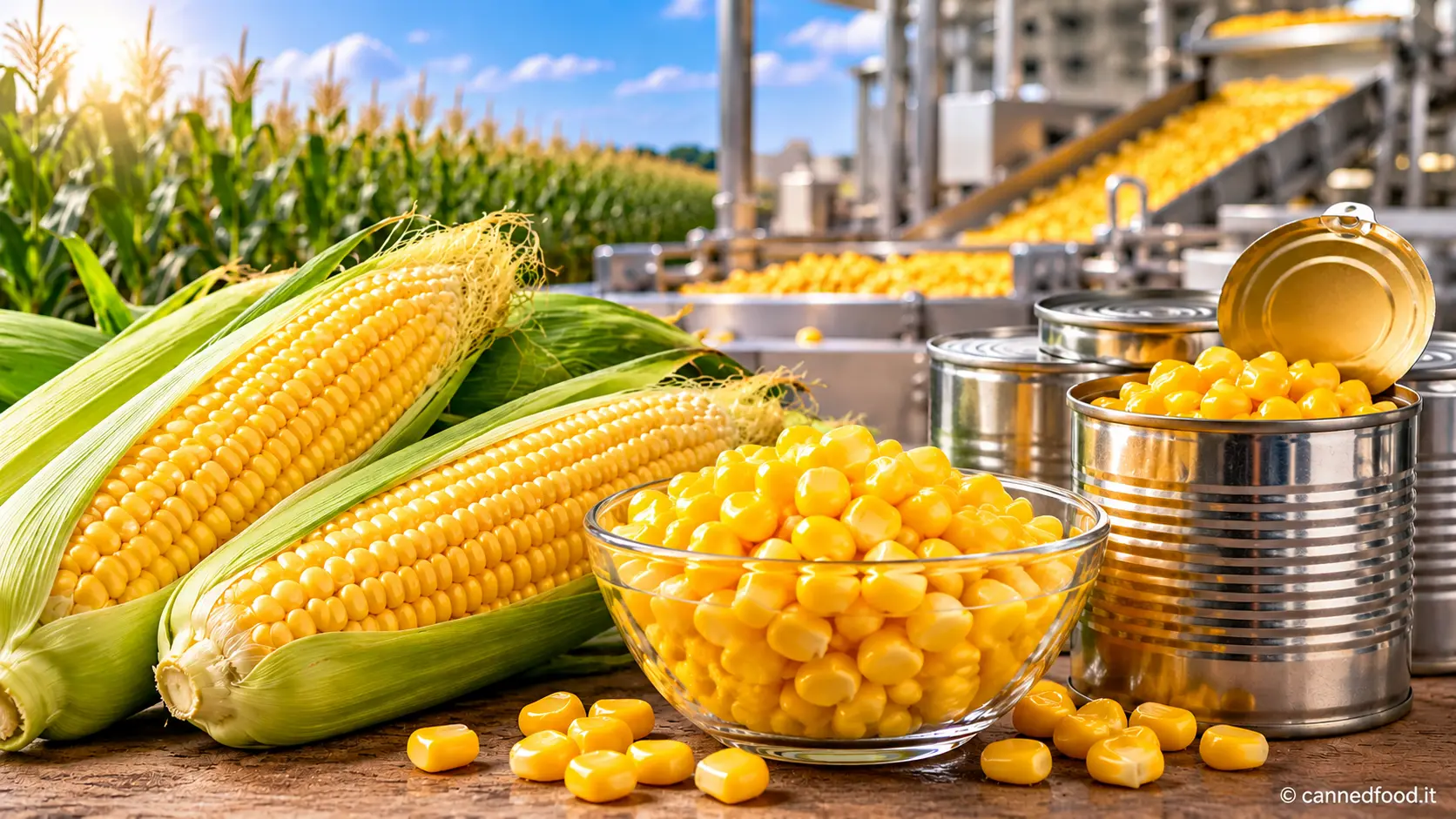
Canned Sweet Corn
Canned sweet corn is a widely traded vegetable product used by retail, foodservice and industrial buyers. Commercial products commonly include whole kernel sweet corn packed in brine and supplied in a range of can sizes and formats.
This directory brings together manufacturers, producers and processors associated with canned sweet corn in key producing and exporting markets.
- 🟢 Thailand: An important international producer and exporter of processed sweet corn.
- 🟠 United States: A major sweet corn producer with a significant presence in international trade.
- 🔵 Europe: An important market and production area, with countries such as Hungary and France playing a significant role.
- 🟡 Asia-Pacific: A major market for processed sweet corn, supported by large consumer markets and established food-processing industries.
According to World Bank WITS / UN Comtrade data for HS 200580 (sweet corn preserved other than by vinegar), the leading exporting countries in 2024 included:
- 🇭🇺 Hungary: US$265.1 million · 135.0 million kg
- 🇹🇭 Thailand: US$236.7 million · 217.5 million kg
- 🇫🇷 France: US$194.0 million · 90.8 million kg
- 🇨🇳 China: US$192.6 million · 169.4 million kg
- 🇪🇸 Spain: US$90.0 million · 43.0 million kg
- 🇺🇸 United States: US$70.6 million · 44.9 million kg
How to Choose a Canned Sweet Corn Supplier
Selecting the right canned sweet corn manufacturer involves more than comparing prices. Professional buyers should evaluate product specifications, food safety certifications, packaging capabilities, production capacity, traceability and export experience before requesting a quotation or starting a private-label project.
🌽 Product Specifications
Check kernel size, colour uniformity, texture, sweetness (°Brix), drained weight and formulation. Buyers should specify whether conventional, organic or Non-GMO sweet corn is required, together with acceptable levels of salt, sugar and other ingredients.
✓ Food Safety & Certifications
Verify internationally recognised food safety standards such as BRCGS, IFS, FSSC 22000 or ISO 22000, together with HACCP. Depending on the destination market, Halal, Kosher or organic certification may also be important.
🥫 Packaging Capabilities
Evaluate available can sizes, easy-open ends, retail and foodservice formats, case configurations and labelling options. For branded importers and distributors, confirm whether the manufacturer offers OEM and private-label production.
📦 MOQ & Production Capacity
Compare minimum order quantities with your purchasing requirements. Ask about annual production capacity, crop seasonality, lead times and the supplier's ability to support regular or high-volume purchasing programmes.
🌱 Origin & Traceability
Ask where the sweet corn is grown and how the raw material is controlled from farm to factory. Harvest-to-processing time, agricultural controls and batch traceability can directly affect product consistency and quality.
🌍 Export Experience
Manufacturers with established export operations are generally better prepared to handle international documentation, destination market requirements, container loading and the specifications of importers, distributors and retail chains.
Supplier Verification
Before placing a commercial order, request current certificates, product specification sheets and samples. For significant purchasing programmes, buyers may also consider laboratory testing, pre-shipment inspection or a factory audit.
🌱 Non-GMO Canned Sweet Corn: What Buyers Should Check
Non-GMO sweet corn is produced from seed that has not been intentionally genetically modified. For international buyers, however, specifying Non-GMO status involves more than selecting the seed variety: appropriate controls may be required throughout growing, harvesting, transport, processing and storage.
Depending on the buyer's specification or destination market, suppliers may need to demonstrate segregation and traceability between Non-GMO and other raw materials. Verification can include seed documentation, supplier declarations, identity-preserved sourcing and, where required, laboratory testing of the raw material or finished product.
Buyer tip: When sourcing Non-GMO canned sweet corn, clearly define the required purity threshold, testing method, supporting documentation and applicable certification in the purchase specification or supply contract. Requirements can vary between customers and markets.
Majestic Food Industry, listed in the CannedFood.it Sweet Corn Directory, states that its sweet corn is Non-GMO and produced without preservatives, additives or artificial colours. View Majestic Food Industry .
Sweet Corn Processing – Video
Discover a video about sweet corn production and processing.
The video is hosted on YouTube and will open in a new browser tab. No YouTube content is loaded on this page.
Watch video on YouTube